
Blog
What a Service Call Actually Covers in Lebanon
A breakdown of what a real service call includes for Lebanon homes built 1959-1994, where original hardware and cold-season swings drive most repair calls.
The Problem
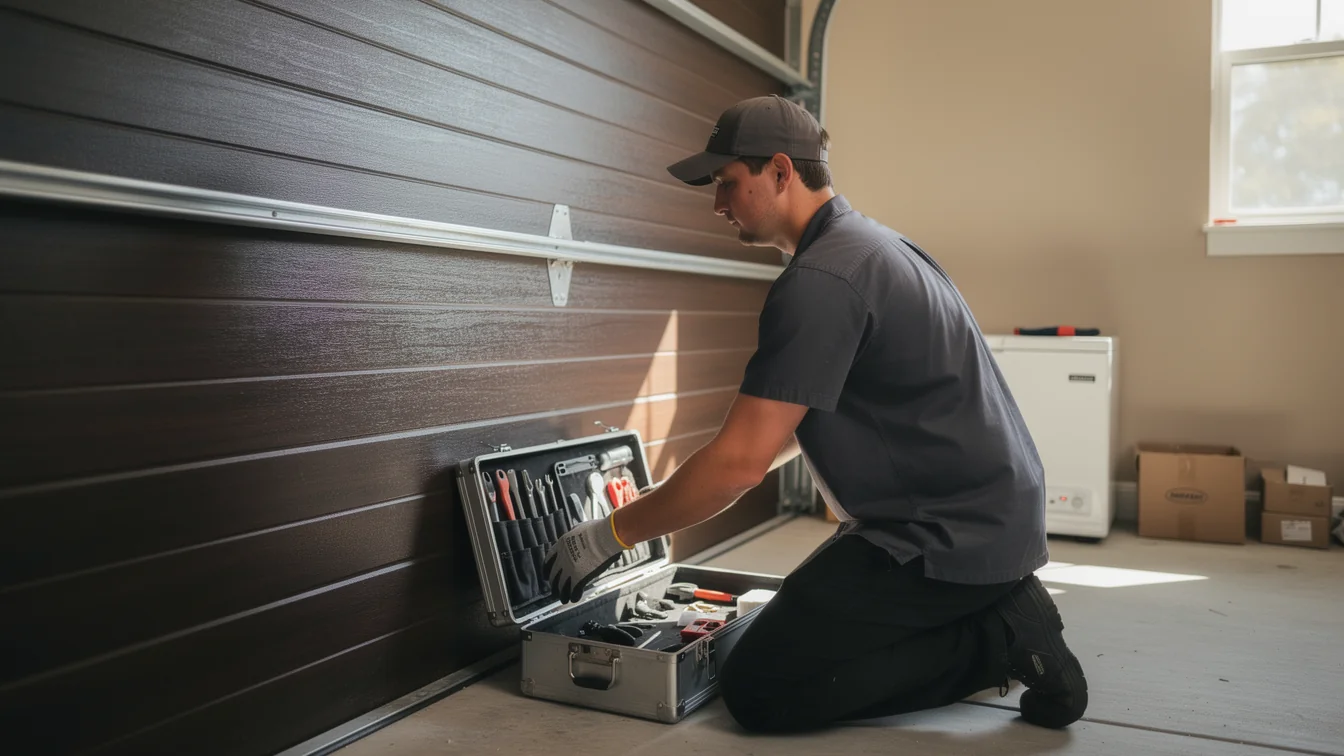
Most of the service calls we run in Lebanon trace back to the same thing: a door and opener that are older than the homeowner realizes. Housing stock across this service area was mostly built between 1959 and 1994, with the median year sitting around 1977. That means a lot of garages still have original or first-replacement hardware - torsion springs sized for doors that have been repainted twice, rollers that were never sealed bearings to begin with, openers from an era before modern safety sensors were standard.\n\nA service call in a neighborhood like that isn't a quick bolt-tightening. It starts with us figuring out what generation of parts we're actually dealing with, because a spring rated for a 1970s door doesn't always match what's on the wall today if someone swapped the door out without upgrading the spring. We check the track alignment, the cable wear, the opener's force settings, and whether the previous owner did a patch repair instead of a real fix. That diagnostic step is most of the call - the actual repair is usually shorter than the inspection that leads to it.
What Local Conditions Do
Lebanon sits in a cold-moderate climate band, which doesn't mean brutal winters, but it does mean real seasonal swings - freeze-thaw cycles that work on metal and lubricant differently than a steady warm climate would. Steel tracks contract in cold mornings and expand again by afternoon, and over enough years that cycling loosens bolts, dries out factory grease, and makes torsion springs more likely to snap on the coldest stretch of a morning rather than mid-day.\n\nOn a service call, that's part of what we're checking even if the homeowner only called about a noise. We look at how the door behaves at the temperature it is that day, not just whether it opens and closes. A door that's quiet in July and groans every time in January usually has a lubrication or hardware issue that the cold is exposing, not causing. For a lot of the original hardware from the 1960s and 70s stock in this area, that seasonal stress is what finally pushes a worn part past the point of just squeaking.
Leaving It Alone
With 3,524 owner-occupied houses across this service area, we see a wide range of how long people wait before calling. Waiting isn't automatically the wrong call - a slightly noisy door isn't an emergency, and we won't tell you it is just to get a truck out there. But a door that's starting to bind on the track, or an opener that strains and reverses on a cold morning, is a different situation. That's a spring or cable losing tension, and those don't fail gently. They fail all at once, usually under load.\n\nThe honest limitation here: we can't always tell you over the phone whether what you're hearing is a five-minute lubrication fix or a spring replacement. Some noises sound identical from the homeowner's side of the door and mean very different things once we're looking at the hardware. That's why the first visit is a real inspection, not a guess based on a description.
When It Stops Being a DIY Job
Household income in this area runs higher than a lot of surrounding counties - median around $87,853 - and that shows up in how many people try to handle garage door issues themselves before calling. Lubricating hinges, tightening visible bolts, clearing the track of debris - that's fine, and we'd rather you do that than nothing.\n\nWhere it stops being a DIY job is anything involving the torsion spring itself, the cables under tension, or the opener's internal force and limit settings. These parts store enough energy to cause a serious injury, and on original hardware from the 1960s-90s stock common here, the spring may not match current sizing standards, which changes how it's handled. If you're calling us from Rural Hill, Green Hill, Watertown, Walterhill, Alexandria, or Bethpage, the same rule applies regardless of distance - we diagnose before we touch anything load-bearing, and we'll tell you plainly if a repair isn't worth it compared to replacing the unit outright.
Questions
Common questions
How old does my garage door have to be before original parts become a problem?
In this area, most houses were built between 1959 and 1994, with a lot clustered around 1977. If your door or opener hasn't been replaced since the house was built, the hardware is likely past its practical lifespan, even if it still functions day to day.
Does cold weather actually affect garage door springs here?
Yes. Lebanon sits in a cold-moderate climate band, and the freeze-thaw cycling through winter dries out lubricant and stresses metal parts faster than a steady climate would. Spring failures and track binding both tend to show up more in the coldest stretches.
Can I just tighten things myself instead of calling?
Lubricating hinges and tightening visible, non-load-bearing bolts is fine. Anything involving the torsion spring, lift cables, or opener force settings isn't a DIY job - those parts hold enough stored energy to cause serious injury if handled wrong.
Recommendation
You Might Also Like
More garage door guides for Lebanon homeowners.
What Lebanon's Older Openers Do When the Power Goes Out
Lebanon, TN homes built between 1959 and 1994 pair older openers with cold-season power cuts.
Read guide
What Lebanon's 1960s and 70s Housing Stock Means for Your Garage Door
Lebanon TN homes built between 1959 and 1994 often have garage doors with no insulation standard.
Read guide
Lebanon's Housing Age and Cold Snaps Are Hard on Garage Door Springs
Most Lebanon, TN homes date from 1959 to 1994, and cold snaps hit older torsion springs hard.
Read guideReady when you are
Need a garage door sorted in Lebanon?
Lebanon Garage Door Pros repairs and installs garage doors, springs and openers in Lebanon, TN and the surrounding area.